



What Is a Barrister’s Gown?
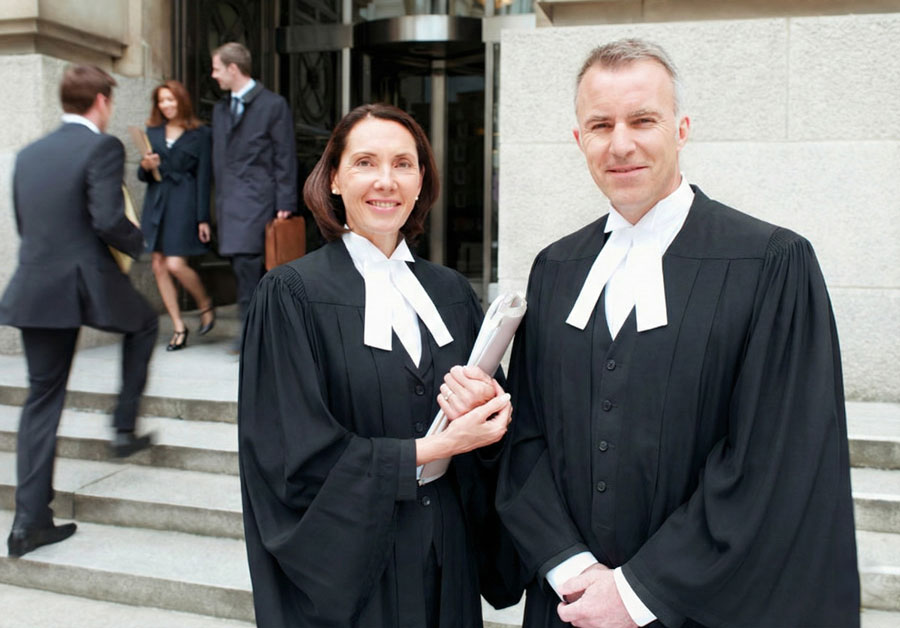
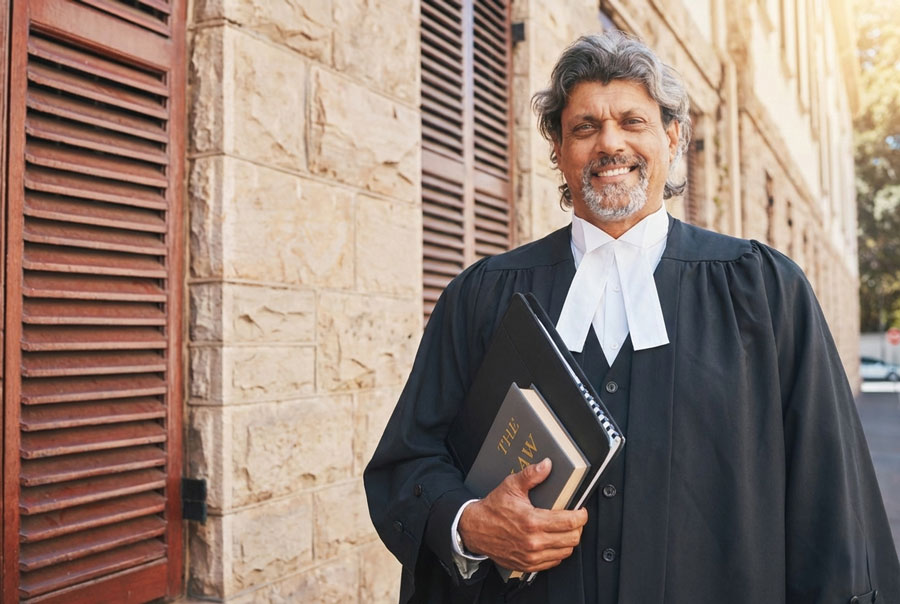
A barrister’s gown is a formal gown or robe worn by a lawyer or judge in certain common law courts. Lawyers have been wearing gowns in the United Kingdom since the 14h century, and wear them in Canada to the present day. Various colors were historically allowed, but for hundreds of years only the color black is considered acceptable.
The barrister’s gown itself is black and unisex. Barrister’s gowns are traditionally made of wool, but lawyers with appointment to King’s Counsel are allowed to wear silk. Wool and polyester blends are also now common due to the high cost of the traditional gowns.
The clothing attire under a barrister’s gown traditionally differs by gender, but for many years it has been considered acceptable and common practice for any gender of barrister to wear the attire that was traditionally for male barristers.
Men traditionally wear a white, stiff wing collared shirt which is similar to a tuxedo shirt but it does not have pleats and is not shiny. A tie or bowtie is not appropriate for a gowned lawyer. In the place of a tie or bowtie, men traditionally wear hanging white strips called “bands” or “tabs”.
Men traditionally wear a black waistcoat in between their white shirt and black gown. The waistcoat is similar to a vest common in any three-piece suit. However, the waistcoat usually has a more aristocratic style than a typical vest, and all buttons should be done up. Men also wear grey or black pants of the same style worn with a typical business suit.
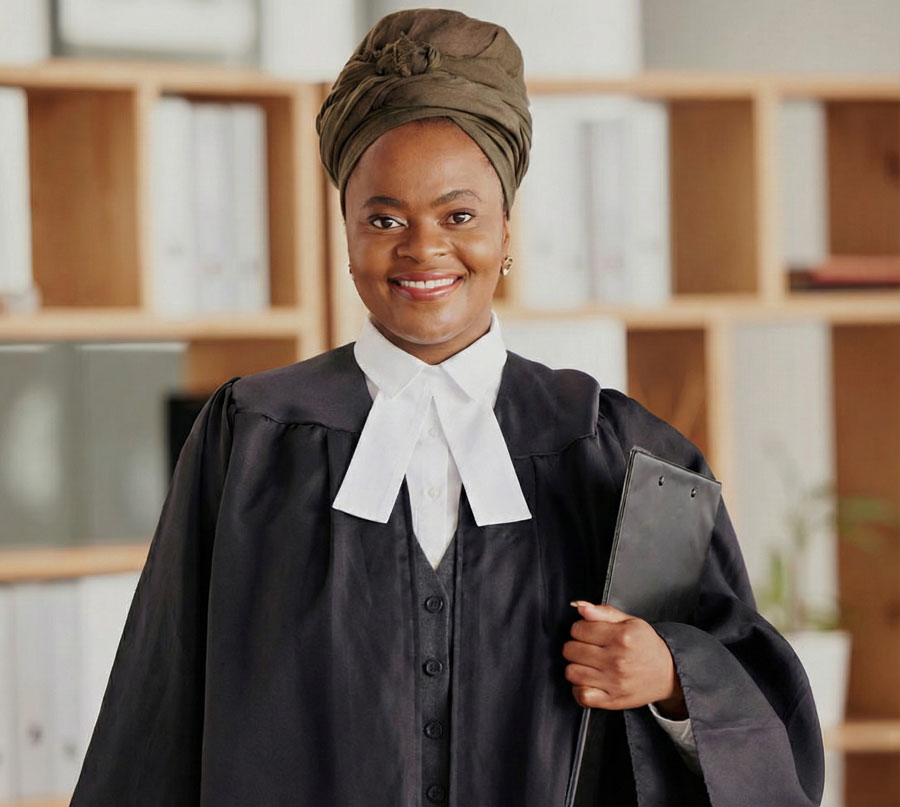
Women traditionally wear a collarette with bands or tabs attached to it instead of a stiff wing collared shirt with tabs. Women also have the option of wearing a formal grey or black skirt extending past the knees under their robes.
Again, it is now common and accepted practice for both men and women to wear the regalia that was traditionally for male lawyers.
Barristers in Canada do not wear wigs.
General Rule on Gowns
Lawyers are not usually required to wear gowns, but for certain formal court appearances, gowning is required. As a general rule, gowning is required where viva voce (verbal) evidence is given. It is not always required where there is verbal evidence, and is occasionally required when there is not verbal evidence.
Alberta Court of King’s Bench
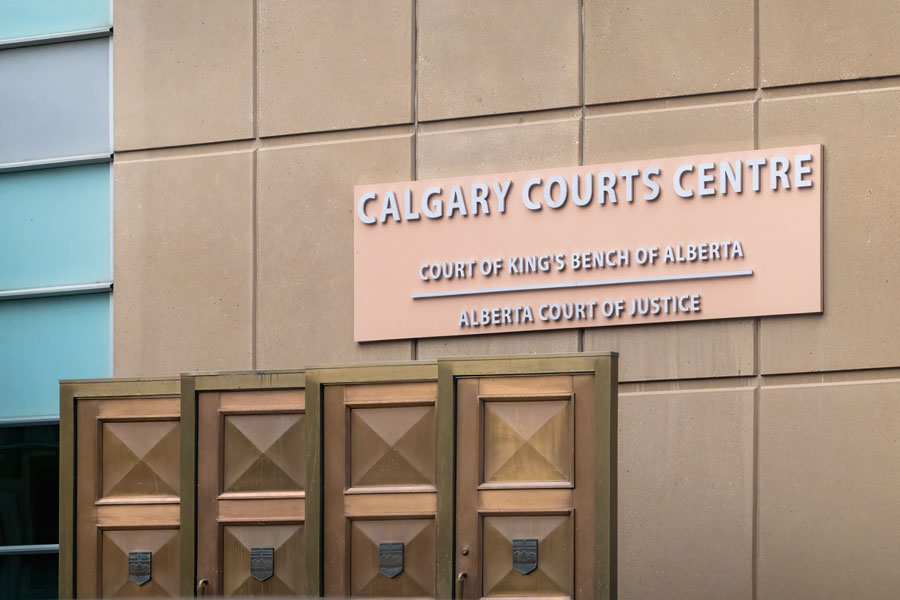
The Court of King’s Bench is the superior court in Alberta. Gowning has been required in certain Court of King’s Bench proceedings for many years under the common law. Currently, King’s Bench gowning requirements are contained in General Practice Note 1, effective January 1, 2023.
Generally speaking, counsel in the Court of King’s Bench are expected to gown for any in-person proceeding in which viva voce (i.e. oral) evidence will be heard. The Court of King’s Bench has stated that counsel are expected to gown for all of the following:
- Civil, Family, and Criminal Trials, including uncontested divorces, surrogate, estate, and dependent adult trials, Emergency Protection Order and Protection Order Review headings, and assessments of damages;
- Any Special Chambers hearing in which viva voce evidence will be heard;
- Summary Trials, regardless of whether viva voce evidence will be heard;
- Hearings under the Reciprocal Enforcement of Maintenance Orders Act and other Hague Convention and inter-provincial hearings;
- Criminal guilty pleas, arraignments, and jury selections;
- Oral hearings for divorce, regardless of whether viva voce evidence will be heard;
- Judgments, except where gowning was not required for the hearing giving rise to the judgment;
- Appeals from decisions of the Alberta Court of Justice and Surface Rights Board;
- Adoptions; and
- Bar Admissions and Swearing-in Ceremonies.
Gowning is not required for the following:
- Appeals from decisions of an Applications Judge;
- Pre-trial Conferences;
- Judicial Dispute Resolution (of any type) or Early Intervention Case Conferences;
- Bail hearings, bail forfeitures, remands, and bail adjournments, unless viva voce evidence is intended to be heard;
- Family Docket Court;
- Any Chambers or Special Chambers hearing (other than an application for divorce) in which viva voce evidence will not be heard; and
- Online hearings, whether or not viva voce evidence will be heard, unless otherwise directed by the presiding Justice.
Counsel with personal circumstances which may make it difficult for them to wear traditional court attire, such as pregnancy, a medical condition, or disability, are permitted to modify their attire. Such modifications may include dispensing with a waistcoat and tabs. Modified attire must be dark in colour and in keeping with Court decorum, but counsel are otherwise free to modify their attire as they see fit.
If counsel are to appear wearing altered attire, they are requested to advise designated court personnel (which is generally the appropriate court coordinator) in advance of their appearance, to avoid the need to discuss their personal circumstances and/or modified attire on the record or in open court.
Alberta Court of Justice (ACJ)
Gowning is not required for any appearances in the Alberta Court of Justice (“ACJ”). This includes applications, pre-trial conferences, and trials.
We did not actually find any official source stating that gowning is not required in ACJ. However, we have experience in the ACJ and its predecessor the Provincial Court of Alberta, and we knew before writing this that gowning was not required in ACJ.
So we will try at an explanation.
It appears that the reason gowning is not required in ACJ, as compared to the Court of King’s Bench, is because the ACJ was not born in the common law. It was a statutorily created court, governed currently by the Court of Justice Act, RSA 2000, which does not specify a gowning requirement. ACJ has general directions requiring everyone to dress in business attire, but that’s all. From its inception, it did not adopt some of the more formal rules of superior courts like ABKB. So essentially, given that gowning was never customary in the ACJ and has not been explicitly mandated by statute or direction, it is not required.
Alberta Court of Appeal
The Alberta Court of Appeal is the appeal-level court for Alberta, hearing criminal appeals from the Alberta Court of Justice, criminal and civil appeals from the Alberta Court of King’s Bench, and appeals from administrative and board tribunals.
Gowning directions in the Court of Appeal are primarily governed by the Etiquette Directions published on the Court’s website.
The Etiquette Directions state that lawyers are required to gown when appearing before a panel of justices at in-person and virtual appeal hearings, panel applications, and bar admissions hearings, but not required to gown when appearing before a single appeal judge or at the Sentence Speak to List, Unscheduled Civil Appeals List, or Criminal Speak to List.
Further gowning directions are found in the Court’s Consolidated Practice Directions, which were last amended on March 10, 2025. The Practice Directions hold that gowning is not required for Judicial Dispute Resolution meetings.
The Etiquette Directions are clear that where personal circumstances require modification of attire, it is permitted but counsel should advise the Court of Appeal ahead of time.
Federal Court of Canada
The Federal Court of Canada is the sole trial-level court for disputes relating to matters of Federal jurisdiction, such as immigration and refugee law, and intellectual property law.
Gowning requirements in the Federal Court are contained in the Court’s Amended Consolidated General Practice Guidelines (the Guidelines), effective June 20, 2025.
The Practice Guidelines hold that unless the presiding Judge or Associate Judge otherwise directs, counsel are required to gown for all in person hearings before the Court, except in the following circumstances:
- Hearings on any motion other than for summary judgment, summary trial, or contempt;
- Case management conferences;
- Dispute resolution conferences;
- Pre-trial conferences; and
- Trial management conferences.
In the situations listed above, counsel are required to wear appropriate business attire.
Notwithstanding the above, as of the date of this article’s publication, the Guidelines hold that until further notice, counsel shall not be required to gown for any hearings that proceed by way of video conference. For such hearings, counsel are expected to dress in appropriate business attire.
The Guidelines are clear that if personal circumstances require modification of attire, it is permitted but counsel should advise the Court ahead of time.
Federal Court of Appeal
The Federal Court of Appeal is the sole appeal-level court for disputes relating to matters of Federal jurisdiction, hearing appeals from decisions of the Federal Court, as well as decisions of certain Federal tribunals.
Gowning requirements in the Federal Court of Appeal are governed by the Court’s Consolidated Practice Direction (the Practice Direction), effective June 26, 2025.
The Practice Direction holds that counsel are required to gown for all appeals and judicial reviews. Business attire may be worn when appearing on motions before the Court, except for contempt of Court motions or motions that proceed before a three-judge panel, where gowning is required.
Where personal circumstances require, counsel may modify their attire as they see fit, so long as such modified attire is dark in colour and in keeping with the Court’s decorum. As with other Courts, it is advised that counsel notify the Court ahead of modifications ahead of time.
Supreme Court of Canada
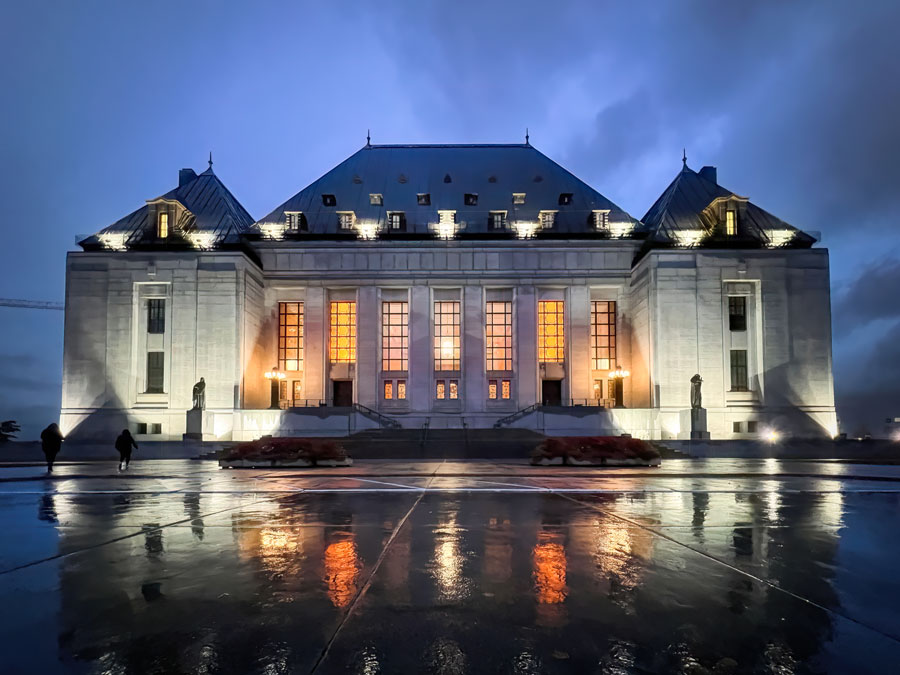
The Supreme Court of Canada is the highest court in the country, hearing appeals from Federal, Provincial, and Territorial appellate courts.
Gowning requirements in the Supreme Court of Canada are governed by the Rules of the Supreme Court of Canada (the Rules). Section 71(7) of the Rules hold that “All counsel appearing before the Court shall be robed”. In other words, there are no exceptions to gowning rules at the SCC – counsel must be robed whenever they appear before the Court.
Further direction on gowning requirements before the SCC can be found in the Court’s Information Page, which holds that counsel’s attire may be modified as needed by counsel who are pregnant or have a medical condition or disability. While the Court does not provide any directions regarding providing advance notice of their modified attire, it is advisable that counsel do so, in order to avoid having to discuss their accommodation needs/modified attire on the record or in open court.