



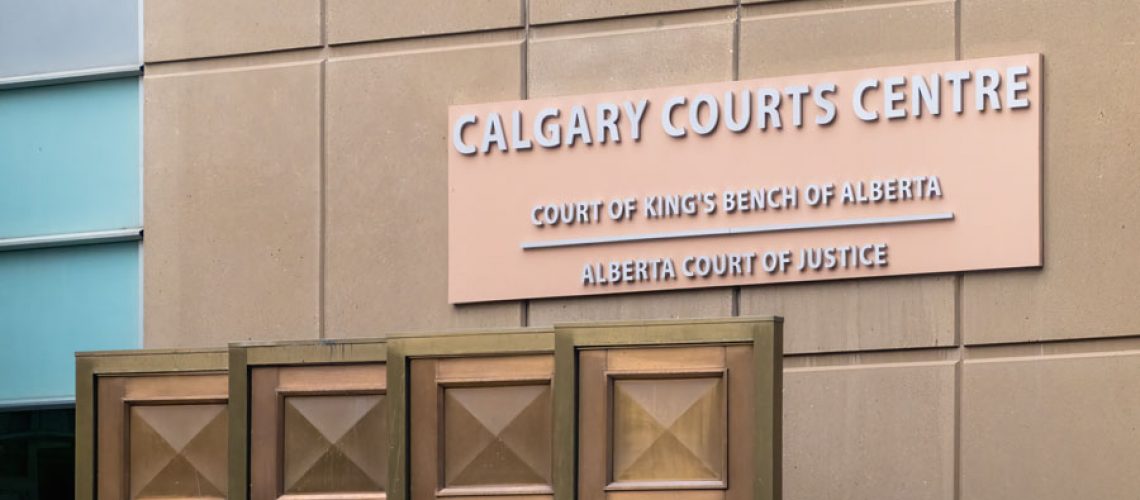
Imhoff v Alberta (Labour Relations Board), 2026 ABKB 418 (CanLII) is a recent judicial review of an Alberta Labour Relations Board (the “Board”) decision surrounding a Duty of Fair Representation complaint pursuant to Section 153(1) of the Labour Relations Code (the “Code”). The ALRB’s decision to dismiss the DFR was upheld by the Court of King’s Bench.
Facts
The following are the pertinent facts of the case:
- The Complainant was a member of the International Brotherhood of Electrical Workers, Local Union 424 (“IBEW”).
- Following an altercation with a colleague, the Complainant was terminated and banned from the worksite on June 17, 2022.
- The Complainant asked IBEW to file a grievance with respect to his termination.
- On August 3, 2022, IBEW advised the Complainant that it had investigated the matter and that it would not be pursuing the grievance.
- On September 15, 2022, the Complainant filed a Duty of Fair Representation (DFR) complaint ( the “First DFR Complaint”).
- On September 29, 2022, IBEW received two documents from the Employer surrounding the incident that lead to the Complainant’s termination ( the “Two Documents”).
- On October 12, 2022, IBEW responded to the First DFR Complaint. IBEW was of the position that it investigated the circumstances surrounding the termination, weighed the evidence and communicated with the Complainant.
- IBEW did not mention the Two Documents in its response to the First DFR Complaint, despite having them in its possession.
- On November 3, 2022, the Complainant withdrew the First DFR Complaint.
- In March 2023, the Complainant received the Two Documents from IBEW. Following this he asked IBEW to reconsider its decision not to file his grievance.
- IBEW stood by its initial position to not pursue the grievance, even in light of the Two Documents.
- On April 11, 2023, the Complainant filed a new DFR complaint, arguing the following:
- IBEW failed to exercise its duty in good faith, objectively and honestly when it withheld and ignored the Two Documents; and
- IBEW’s decision not to grieve his termination “was arbitrary and capricious, in view of the evidence in its possession at the time, and smacks of serious negligence”
(the “Complaint”).
- The Board dismissed the Complaint, for no arguable case, for the following reasons:
- While IBEW did not have the Two Documents when investigating the whether to file the grievance, the Applicant withdrew the First DFR Complaint while knowing IBEW had not reviewed any statements from his Employer;
- IBEW’s failure to disclose the Two Documents in its response to the First DFR Complaint was an oversight, that did not “rise to the level of complete disregard for consequences captured by the concept of serious negligence”; and
- There was “no reasonable prospect of success” for the Complainant’s position that the delay in disclosing the Two Documents amounted to gross negligence
(the “Board’s Decision”).
- The Complainant filed an application for judicial review of the Board’s Decision with the Court of King’s Bench
Analysis/ Conclusion
The Board applied for and obtained standing in the judicial review on the following:
- To provide submissions on the applicable standard of review; and
- Provide background information regarding the legislative framework and Board processes that apply to duty of fair representation complaints.
Since the Complainant was seeking judicial review of a decision of the Board, the standard of review was reasonableness, which the Court summarized as follows:
[43] […] A reviewing Court must consider whether “the decision as a whole is reasonable.” The decision must be “internally coherent,” follow a “rational chain of analysis” and be “justified in relation to the facts and law that constrain the decision maker:” Vavilov at para 85.
[44] A reviewing Court must take a “reasons first” approach. This requires the Court to examine the reasons of the decision maker and seek “to understand the reasoning process:” Vavilov at para 84.
[45] According to Vavilov, the Applicant in a judicial review hearing has the burden of showing that the decision of the Adjudicator is unreasonable: Vavilov at para 100. This burden will be met where:
…the reviewing court [is] satisfied that there are sufficiently serious shortcomings in the decision such that it cannot be said to exhibit the requisite degree of justification, intelligibility and transparency. Any alleged flaws or shortcomings must be more than merely superficial or peripheral to the merits of the decision. It would be improper for a reviewing court to overturn an administrative decision simply because its reasoning exhibits a minor misstep. Instead, the court must be satisfied that any shortcomings or flaws relied on by the party challenging the decision are sufficiently central or significant to render the decision unreasonable (ibid).
Late Disclosure of the Two Documents
The Complainant argued as follows:
(a)The Board conclusion that the delayed disclosure was not grossly negligent is undermined because it did not consider the gap of four months between the withdrawal of the First Complaint and the disclosure;
(b) The Applicant suffered prejudice as a result of the late disclosure because the First Complaint might not have been withdrawn and may have led to a different result had timely disclosure been made;
(c) The Board failed to attribute sufficient evidentiary value to the Two Documents
The Court found the above argument was meritless for the following reasons:
- When IBEW decided not to advance the grievance, the Complainant was aware at the time that IBEW did not have any statements from his Employer’s Supervisors. This was a finding a fact that was not reviewable on judicial review;
- The Board made it clear that IBEW’s failure to disclose the Two Documents was an oversight and accidental misstep. It was reasonable for the Board to determine that the Complainant’s gross negligence argument had no reasonable prospect of success; and
- The Complainant did not suffer any substantive prejudice. Once the Two Documents were disclosed IBEW considered how it impacted its decision not to file the grievance, it had no impact.
The Board’s use of the phrases “no arguable case” and “no reasonable chance of success”
- The Complainant was of the position the two phrases could not be used interchangeably as they impose different standards. In particular, “no arguable case” imposed a lower standard and is to be applied when the Board relies on written materials and the Complainant can rely on assumed fact. Whereas “no reasonable chance of success”, applies where the evidence has been subjected to examination and cross examination.
- The Court disagreed; it was reasonable for the Board to use the two phrases as expressions to describe lack of merit.
- The Complainant sought judicial review on the following grounds:
- Late disclosure of the Two Documents; and
- The Board’s use of the phrases “no arguable case” and “no reasonable chance of success”.
Overall, the Court found that the Board’s Decision to dismiss the DFR was reasonable. It demonstrated a rational chain of analysis and fell within the range of possible outcomes that were reasonably available.
My Take
I am not surprised by the outcome of this case.
It is always difficult to establish a breach of the duty of fair representation, because the legal presumptions around representation favor the unions.
To add a further level of difficulty, while parties have the ability to have a DFR decision judicially reviewed by a body outside of the Board (Court of Kings Bench), ultimately, the Board is provided a large amount of deference when its decision is being reviewed. Otherwise, it would bring the authority and specialized knowledge of the Board into question.